Home / Chain Link Fence Repair: Tension, the Top Rail and Splicing the Mesh
Chain Link Fence Repair: Tension, the Top Rail and Splicing the Mesh
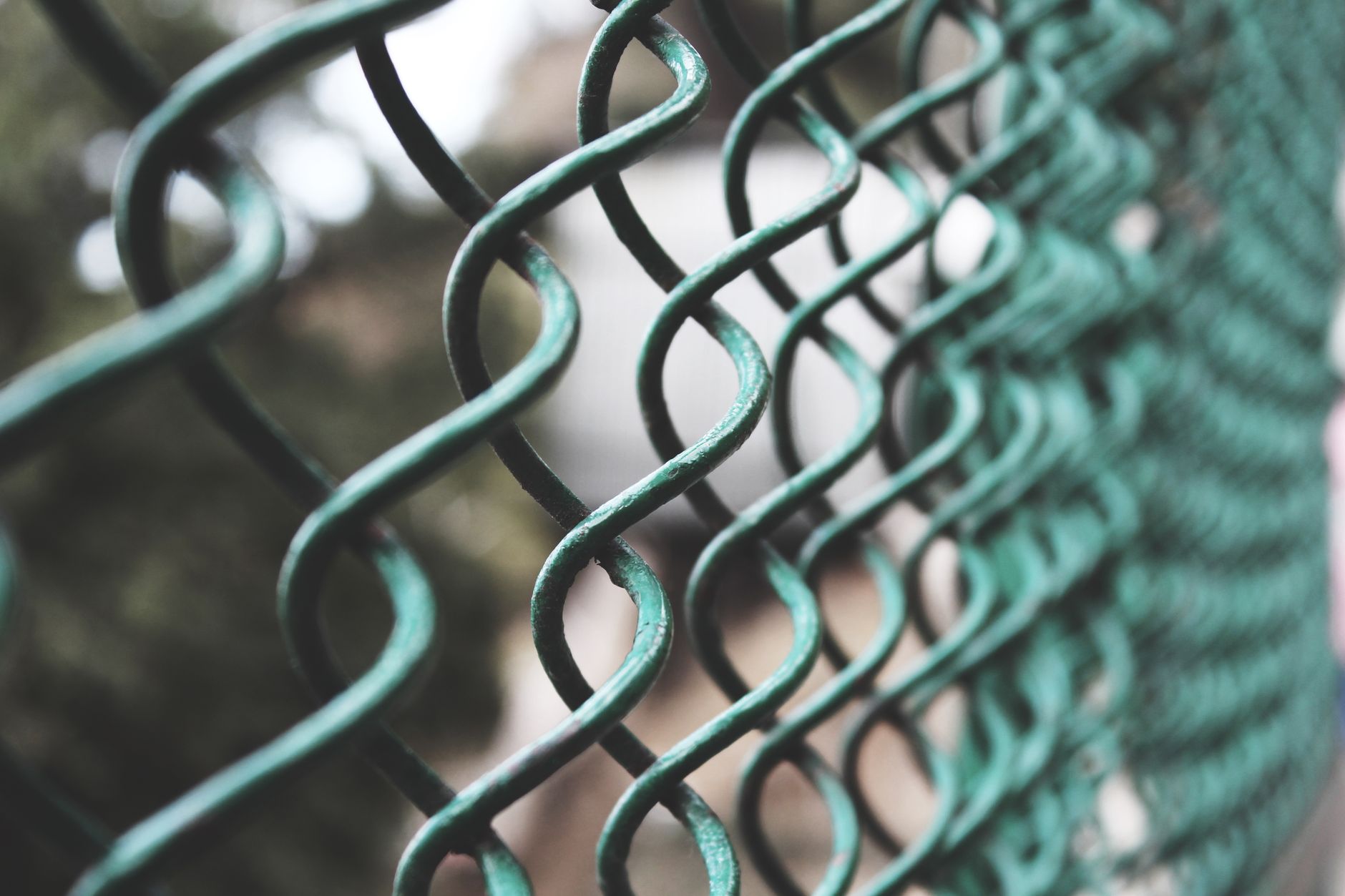
Chain link is the fence people assume you cannot repair. It looks like one continuous object, the damage usually shows up as a sagging belly of mesh rather than a broken part, and the instinct is that the whole run is finished. That instinct is almost always wrong. Of all the common residential fences, chain link is the one most fully built out of separate, standardised, still available parts, and a run that looks tired is often carrying one failed component and a lot of loose tension.
The reason the repair goes badly when it goes badly is almost never the mesh. It is that whoever worked on it did not know what was holding the fence tight in the first place, so they re-tied a sagging section to a top rail that had already moved and called it fixed. Six months later the same belly is back in the same bay.
Diagnosing that correctly is the whole job, and it is the first thing a crew like fences edmond line, ok, will look at before quoting anything, because the difference between a tension problem and a post problem is the difference between an hour of work and a day of it. What follows is how to tell them apart, and what each fault actually costs in labour.
Learn the parts, because the fault is named after one of them
A chain link fence has roughly nine components and every repair conversation is about one of them.
Terminal posts are the fat ones: ends, corners, and either side of a gate. They carry every pound of tension in the fabric and they are the only posts that are structurally loaded sideways.
Line posts are the thinner ones in between, normally spaced no more than ten feet apart. They do not hold tension. They hold the fabric up and keep it in a plane.
Top rail runs through loop caps that sit on each line post and lands in a rail end cup bolted to each terminal post. The rail lengths telescope, one swaged end into the next. It is a compression member and a straightedge, not a tension member.
Tension bar is a flat vertical bar woven through the last column of diamonds at each terminal post. Tension bands clamp that bar to the post, usually one band per foot of fence height.
Tie wires are the small aluminium ties along the top rail and line posts. They locate the fabric. They do not tension it, and this is the single most misunderstood point on the whole fence.
Bottom tension wire is the coiled spring wire stretched along the base and hog ringed to the fabric, on fences that have one.
Fabric is the mesh itself, defined by mesh size, wire gauge, height and coating.
Once you can name the part, the quote stops being a mystery. A fence with a bellied section and sound posts is a stretching job. A fence with a leaning terminal post is a concrete job, and the mesh is innocent.
Sagging fabric is a tension fault, and re-tying never fixes it
Mesh goes slack for one of three reasons: the tension bands at a terminal post have slipped or their carriage bolts have loosened, the fabric was never stretched properly at installation, or something has pulled the fence sideways and taken the tension out of a run.
The proper repair is to restretch. The fabric is released from the terminal post, gripped across its full height with a stretcher bar, and pulled with a come along until the diamonds deflect correctly, then the tension bar is refitted and banded. Done right, you can push the middle of a bay with a flat hand and get a small amount of give that returns instantly, with no rattle and no wave along the top line.
There is such a thing as too tight. Fabric hauled beyond its working tension pulls terminal posts inward over the following year, which is why a fence can look perfect on the day and lean at both ends by the next summer. Tension is a range, not a maximum.
The cheap version of this repair is to add more tie wires along the top rail and cinch the mesh up to it. It looks better for a season. What it has actually done is hang the weight of loose fabric on a rail that was never meant to carry it, which is how a top rail ends up bowed between line posts.
Reading the diamonds
Stand at the end of the run and look down the line at the mesh, not at the top rail. On a correctly tensioned fence the diamonds are even and the pattern is regular for the whole run. Where tension has gone, the diamonds near the slack section pull into a slightly different shape and the top line develops a shallow wave. That wave tells you which terminal post to inspect first, because it always points back to the end that let go.
The top rail: bent, telescoped apart, or pulled out of the cup
Top rail damage is common because it sits at exactly the height of a truck mirror, a trailer corner and a falling limb.
A bent length does not need the whole run replaced. The damaged section is cut out at a convenient point and a new piece is fitted with a rail sleeve, or a swaged end is used to telescope into the existing rail. The critical detail is that the joint should not land directly over a line post loop cap if it can be avoided, because a sleeve sitting in a cap is hard to keep straight.
The other failure is a rail that has crept out of its end cup at a terminal post, usually after ground movement or after someone leaned a ladder against the run. That leaves a floating rail end inside a loop cap with nothing locating it, and the fabric under it goes wavy within weeks. It is a twenty minute fix that people live with for years because nobody looked at the last three feet of the fence.
Splicing fabric, and why you rarely need a whole new roll
Chain link has a property no other fence material has: it can be unzipped. Any single strand can be unscrewed out of the weave, which separates one piece into two, and the same strand can be screwed back in to join two pieces together. A competent installer can take a damaged nine foot bay out of a run, weave a new piece in, and leave a joint that is genuinely hard to find.
That matters for the three most common damage events. A vehicle or mower strike that mangles a few feet of mesh does not need the run replaced, it needs the crushed diamonds cut out and a patch woven in. A dog that has worked a hole at the bottom of one bay needs the damaged section cut back to sound wire and spliced, plus a bottom tension wire so it cannot recur. A cut section from an attempted entry is the same operation.
What has to match is the specification, not the brand. Mesh size, wire gauge, height, selvage and coating all need to agree or the patch will read as a patch forever. Two inch mesh is standard residentially, and gauge is counterintuitive: eleven gauge is the common residential wire and nine gauge is thicker and stronger, so the lower number is the heavier fence. Selvage is whether the top and bottom wire ends are knuckled over or left barbed. Coating is either galvanised or a vinyl coating over a galvanised core, and colours vary enough between manufacturers that a sample in daylight beats a name on an invoice.
Anyone comparing quotes after searching fence repair near me should ask which of these the contractor intends to match and which they intend to approximate. It is the question that separates the two prices.
Posts, and the one fault that is not a quick job
Line posts are cheap to deal with. A bent one can often be sleeved, and a replacement means releasing the fabric locally, pulling the post, and resetting in the same hole. The fence around it barely knows.
Terminal posts are the real work. They are in tension all their lives, and when one leans inward it is doing so because its footing has lost its grip or was undersized to begin with. Resetting means breaking out concrete, digging deeper and wider than the original, resetting plumb with the fabric slackened off, and letting the concrete cure before the run is retensioned. On a commercial installation there would also be a horizontal brace rail back to the first line post and a diagonal truss rod with a turnbuckle, and retrofitting that assembly to a residential end post is the permanent answer when a corner keeps pulling in.
A terminal post that is leaning is also a reason to look at the whole run. If the fabric is tight enough to drag a footing over, it is tight enough to be doing the same, more slowly, at the far end.
Gates sag for a different reason than the fence
A chain link gate is a welded or fitted frame with its own tension bars and its own mesh, hung on a pin hinge at the post. When it drops at the latch corner, the frame has racked into a parallelogram. Tightening the hinges does not fix that and usually makes it bind.
The correct repair is a diagonal truss rod across the frame, from the top hinge corner down to the bottom latch corner, with a turnbuckle to pull the frame back square. Most residential gates that sag never had one. Where the frame corners themselves have failed, the fittings or welds are the repair, not the hinges.
The other gate fault worth knowing is a gate post that has tipped under the gate's own weight, which shows as a gate that drags in one season and swings free the next. That is a footing job, the same as any terminal post.
When a chain link fence is genuinely finished
Repair stops paying at a fairly clear line. When the fabric has lost its galvanising across most of the run and is flaking rather than spotting, the wire section is going and no amount of tension will hold a top line. When more than a third of the line posts are bent or rusted through at grade. When the fence is a height or a mesh size that no longer suits what it is enclosing, which is a specification problem that repair cannot solve.
Everything short of that is parts and labour, and the parts are still on a shelf. That is the unusual advantage chain link has, and it is worth knowing before anyone quotes you a complete replacement for a fence with one slack bay and a bent rail.